
At a Glance
- Service: Porcelain and composite dental veneers for chipped or cracked teeth, permanent staining, small gaps, minor misalignment, and shape or size corrections
- Serving: Loganville on both the Gwinnett and Walton sides, Bay Creek, and the Highway 20 corridor
- Office hours: Mon-Tue 8:00 AM - 5:00 PM | Wed 7:00 AM - 3:00 PM | Thu 8:00 AM - 4:00 PM | Fri 8:00 AM - 1:00 PM (one Friday per month)
- New patients: Yes, and cosmetic consultations are available for existing and new patients alike
- Why patients choose us: Psychology-informed consultations for patients hesitant about the irreversibility of veneer prep

Porcelain veneers have a real hesitation problem. The prep removes a small amount of natural enamel, which cannot grow back. The result is durable but not perfect: a chipped veneer years down the road happens, and repair is not always straightforward. And the aesthetic outcome depends entirely on how the case is designed. Bad veneers look bad in a way that is hard to hide. Loganville patients considering veneers usually arrive with these concerns already on their minds. This page addresses them directly. Call (678) 336-1983 to schedule a consultation.
The Real Concerns Behind Veneer Hesitation
Three concerns come up in almost every veneer consultation. The first is irreversibility of the tooth prep. The second is the fear of an obviously fake result. The third is the cost combined with the possibility that something will go wrong down the line.
All three are legitimate. Dismissing them as easily-solved is dishonest. Addressing them directly, with what actually happens and what the risks actually look like, is the point of a good consultation. Dr. Pickwick spends more time on the concerns than on the sales pitch, because a hesitant patient who moves forward with clear expectations usually becomes a happy patient at year five, and a hesitant patient who was rushed into a decision usually does not.
The Irreversibility Conversation
Traditional porcelain veneers require removing a small amount of enamel: typically 0.5 to 0.7 mm from the front surface of the tooth, roughly the thickness of a fingernail. That enamel does not grow back. Once you have veneers, you either maintain them or replace them for the rest of your life.
Two adjustments can reduce the irreversibility factor. Minimal-prep veneers remove much less enamel than traditional preparation. No-prep veneers (sometimes marketed as Lumineers or similar branded products) remove no enamel at all, though they only work on certain tooth shapes and sizes. Composite bonding, a different procedure entirely, adds material to the tooth surface without removing any enamel and can be reversed by removing the composite.
For patients where the irreversibility feels unacceptable, composite bonding is often the better first step. It costs less, lasts about half as long, but does not commit you to lifetime maintenance. If bonding produces the result you want, no further action is needed. If bonding does not go far enough, veneers become a follow-up decision made with real experience rather than speculation.
Avoiding the Chiclet-Smile Look
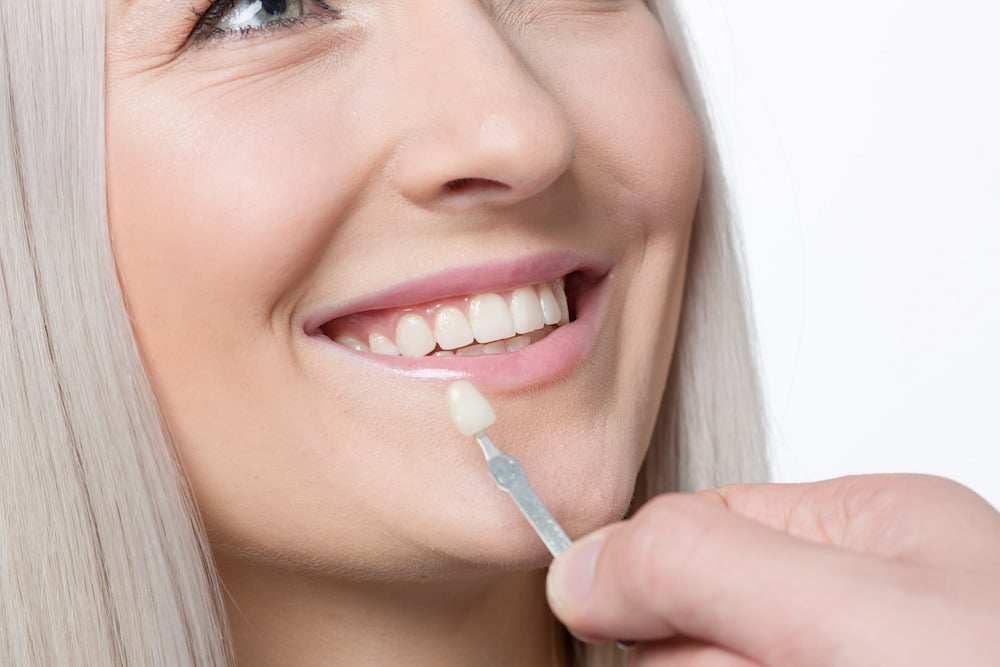
The aesthetic risk with veneers is real. Poorly-designed veneers produce the identifiable look many patients have seen on television: teeth that are too white, too uniform, too rectangular, and too long. Observers register those smiles as artificial even from across a room.
Good design avoids the pattern through specific choices. Shade selection stays within one or two tones of the natural tooth color, or of a shade that reads as improved rather than replaced. Individual veneers get slightly different shapes and lengths rather than being cut as identical rectangles. Edge translucency matches natural teeth. Length calibration respects the natural resting position of the lips.
During the consultation, Dr. Pickwick usually shows patients a range of veneer results from previous cases and asks them to identify which ones look artificial. That exercise sharpens the aesthetic conversation quickly. Patients who thought they wanted the brightest possible shade usually end up choosing something more natural after seeing side-by-side comparisons.
When to Consider Bonding Instead
Composite bonding is worth serious consideration if any of these apply: the concern is a single tooth or a small area rather than a full smile, the budget is tighter than veneers require, the patient is under 30 and not committed to lifetime maintenance, or the enamel is thin and would not tolerate veneer preparation well.
Bonding costs a fraction of veneers per tooth. It lasts about half as long. It can be redone or removed. It does not require permanent alteration of the tooth. For the right patient with the right concern, it produces an excellent result. For the wrong patient (severe stains, full-smile transformation, large gaps), it falls short and veneers become the appropriate choice.
What the Process Feels Like
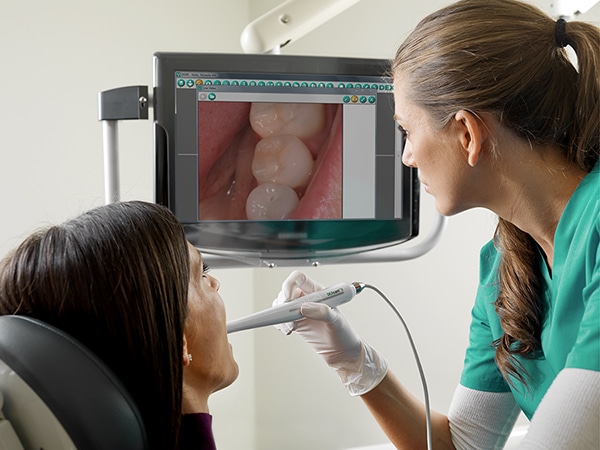
The first appointment involves local anesthesia so the prep is comfortable. Most patients report the anesthesia as the least pleasant part of the visit. The prep itself takes about 30 minutes for a set of veneers and produces no pain during the visit. Some patients experience mild sensitivity for a few days afterward while wearing temporaries.
The second appointment involves less numbing (a light topical is usually sufficient), the try-in, adjustments, and bonding. No pain during bonding. Some patients report the light-cure process feels warm on the tooth briefly. Post-bonding, mild sensitivity to cold is common for a few days and resolves on its own.
Meet Your Cosmetic Dentist
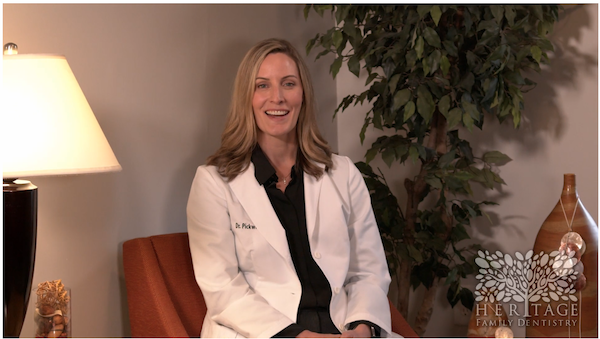
Dr. Erin Pickwick's psychology background from Loyola University New Orleans shapes how she runs veneer consultations. Anxious patients get the extended version of the conversation, with the alternatives laid out honestly and no pressure to commit at the first visit. Patients hesitant about the irreversibility often leave the consultation with a composite bonding plan or a wait-and-think recommendation rather than a veneer appointment. That approach costs the practice some short-term revenue and produces long-term patient trust, which is the trade she has made intentionally for 15+ years.
The Drive from Loganville
From the Highway 78 intersection in Loganville, head north on Highway 20 toward Grayson. The office sits at 2023 Grayson Hwy, Suite 203, on the Lawrenceville side of downtown. Bay Creek and Walton-side patients follow the same route. Cosmetic consultations run 45 to 60 minutes. Call (678) 336-1983 to schedule.
Learn More About Our Grayson General & Family Dental Services






Loganville Patient Questions
If I hate my veneers after they are placed, can they be removed?
A: The porcelain can be removed, but the underlying tooth structure was permanently altered during preparation. Once the veneers come off, the teeth need to be covered with new veneers, crowns, or composite bonding. Bare prepped enamel is not a viable long-term option. Dr. Pickwick discusses this thoroughly during the consultation so the decision is fully informed before you commit.
Will my veneers look obviously fake up close?
A: They should not, if the shade, shape, and length are calibrated correctly during design. Bad veneers read as fake at conversation distance. Good veneers pass close inspection because they mimic the natural variation of real teeth. Dr. Pickwick shows before-and-after cases during consultations so you can judge the aesthetic quality of previous work directly.
Does the veneer prep hurt during the appointment?
A: No, because local anesthesia numbs the area first. The anesthesia itself is the least pleasant part of the visit for most patients. Actual prep, impression-taking, and bonding produce no pain. Mild sensitivity to cold is common for a few days after both visits and resolves on its own.
What happens if a veneer chips or falls off years later?
A: A chipped veneer can sometimes be repaired chairside with composite material, though the repair rarely matches the porcelain perfectly and is often visible. A veneer that comes off entirely can sometimes be re-bonded if it is intact; otherwise a new one is fabricated. Full replacement uses the same two-visit process as the original placement.
I am worried about the chiclet smile I see on TV. How do you avoid that?
A: By staying within one or two shades of your natural teeth rather than jumping to the brightest available shade, by varying the shape of individual veneers rather than making them identical, and by calibrating length to the natural resting position of your lips. Dr. Pickwick shows examples during consultation so you can see the difference between over-done and well-done cases.
Heritage Family Dentistry
2023 Grayson Hwy, Suite 203, Grayson, GA 30017
(678) 336-1983
- Veneers in Dacula
- Veneers in Snellville
- Veneers in Lawrenceville
- Veneers in Loganville
- Veneers in Centerville
Have a question? We have answers.
New Patient Specials
New Patient Comprehensive Dental Exam
$159
No insurance? We offer a $159 Comprehensive New Patient Exam and X-Rays.
New patients only. Cannot be combined with insurance.
No Insurance?
The Heritage Family Dentistry Membership Plan
With our membership plan, you can receive the quality care you need at a discounted price. Both monthly and annual payment plans are available.
Cannot be combined with insurance.
Our Grayson Dental Practice Location
Office Hours:
Monday - Tuesday: 8:00 AM - 5:00 PM
Wednesday: 7:00 AM - 3:00 PM
Thursday: 8:00 AM - 4:00 PM
Friday: 8:00 AM - 1:00 PM
(one Friday per month)
Saturday: Closed
Sunday: Closed
